In 1761, a young boy arrived at Norbiton Place near Kingston upon Thames as a gift. By the time of his death 75 years later, he had transformed from an enslaved child into a respected businessman and property owner known as "Kingston's Black Gentleman."
From Senegambia to Norbiton
Cesar Picton was born around 1755 in Senegambia, West Africa, likely into a Muslim family. In November 1761, Captain John Parr, a British Army officer serving in West Africa during the Seven Years' War, brought the six-year-old boy to England. On 8 November 1761, Sir John Philipps, 6th Baronet and Member of Parliament for Pembrokeshire, recorded in his journal: "Went to Norbiton with Capt. Parr and Lieut. Rees, taking with me a Black Boy from Senegal given me by Capt. Parr."
The following month, on 6 December 1761, the boy was baptised and christened "Cesar" at Norbiton. Sir John's household accounts note expenditure of 10s.6d on a velvet turban for the child, and payments to his godparents. In June 1762, Cesar travelled with the Philipps family to Picton Castle in Pembrokeshire, remaining there when the family returned to Norbiton in October.
Independence in Kingston
When Sir John Philipps died in 1764, Cesar was approximately nine years old. He continued to live with the Philipps family, and by 1788, when Lady Elizabeth Philipps died, he had spent nearly three decades in their household. Unlike servants, who typically received £10, Cesar received a legacy of £100; Horace Walpole noted in 1788 that the Philipps sisters had "a favourite black, who has been with them a great many years and is remarkably sensible."
Cesar used this legacy to establish himself as a coal merchant in Kingston upon Thames. The business operated from strategic premises at 52 High Street, a property backing onto the River Thames with its own wharf for unloading coal and an attached malthouse. By 1795, he had purchased the property outright, renaming it "Picton House." His success was likely aided by connections to the Philipps estate at Picton Castle, a coal mining centre that could supply his trade.
By 1801, he appeared on the Surrey freeholders list as "Caesar Picton, Coal Merchant," and property deeds referred to him as a "gentleman."
Property, Status, and the Law
In September 1801, Picton was convicted of shooting game without a licence and fined £5. The case attracted sufficient attention that he engaged a London attorney, Mr. Manley, to appeal to the Court of King's Bench. The conviction was upheld on a technicality. Notably, court records and newspaper reports of the case made no reference to his race; this silence was unusual for the period and suggests his status as a freeholder may have afforded him a degree of legal parity.
By 1807, Picton had let his Kingston properties and moved to a rented house in Tolworth, marking his retirement from active trade. In 1816, he purchased a substantial property in Thames Ditton for £4,000, paying the full amount without a mortgage, and renamed this residence "Picton House" as well.
Throughout his later life, he maintained connections with the Philipps family. The three unmarried Philipps daughters left him additional legacies: £100 from Miss Mary in 1801; £100 plus £30 annually for life from Miss Joyce in 1820; and £50 from Miss Katherine. In 1823, he appeared as a witness to Lord Milford's will, swearing he had known him "for several years."
Final Years and Legacy
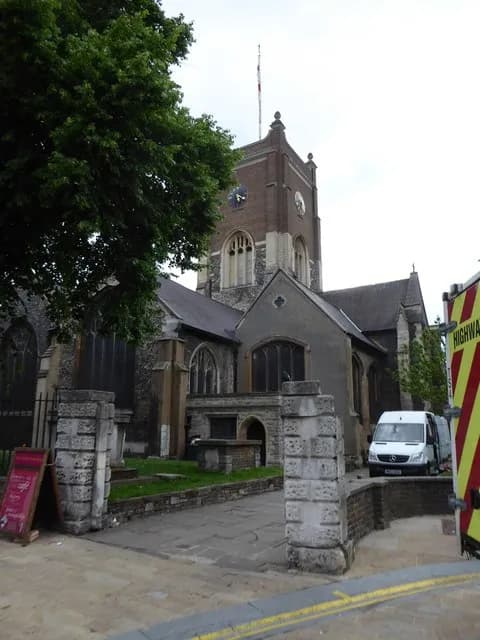
Cesar Picton died in 1836 at the age of 81. His burial at All Saints Church, Kingston upon Thames, required a four-wheeled trolley to carry his coffin, testament to his considerable physical presence. He is buried in a vault at the church, which remains standing as a Grade I listed building.
Today, his legacy is preserved at multiple Kingston locations. The property at 52 High Street, now a Grade II* listed building, bears a commemorative blue plaque summarising his remarkable life. The Thames Ditton property also retains its commemorative plaque and Grade II listed status.
Kingston University honours his memory with The Picton Room, a meeting and reception space. In 2014, the university hosted "Africans in Georgian London: Cesar Picton and his World in Film and Records," an event examining his life in historical context. His story is also told in the children's novel Jupiter Williams by S.I. Martin, published in 2007.
Cesar Picton stands as a rare documented example of Black upward mobility in 18th-century Britain, contemporaneous with figures such as Olaudah Equiano and Ignatius Sancho. From his arrival as a gifted child to his establishment as a Kingston property owner and gentleman, his life offers a tangible connection to the area's complex history.