For more than half a century, the quiet market town of Kingston upon Thames served as the unlikely cradle of British fighter aviation. From Sopwith's canvas biplanes to the revolutionary Harrier jump jet, Kingston's Canbury Park Road factories produced some of the most iconic military aircraft in history.
The Hawker Legacy Begins
The story begins in September 1920, when Australian aviator Harry Hawker and three associates, including Thomas Sopwith, founded H.G. Hawker Engineering with £5,000 each. The company emerged from the liquidation of the Sopwith Aviation Company, and the new firm deliberately adopted Hawker's name to avoid confusion with its predecessor's tax liabilities. By 1933, the business had been renamed Hawker Aircraft Limited, with its headquarters firmly established in Kingston upon Thames.
The company's roots in Kingston stretched back further. In 1912, Sopwith Aviation had expanded from Brooklands to a former roller skating rink on Canbury Park Road, drawing upon the town's established boatbuilding and coachbuilding skills. By 1915, the firm had built a 5.5-acre factory further along the same road, laying the groundwork for what would become one of Britain's most important aircraft manufacturing centres.
The Hurricane Takes Shape
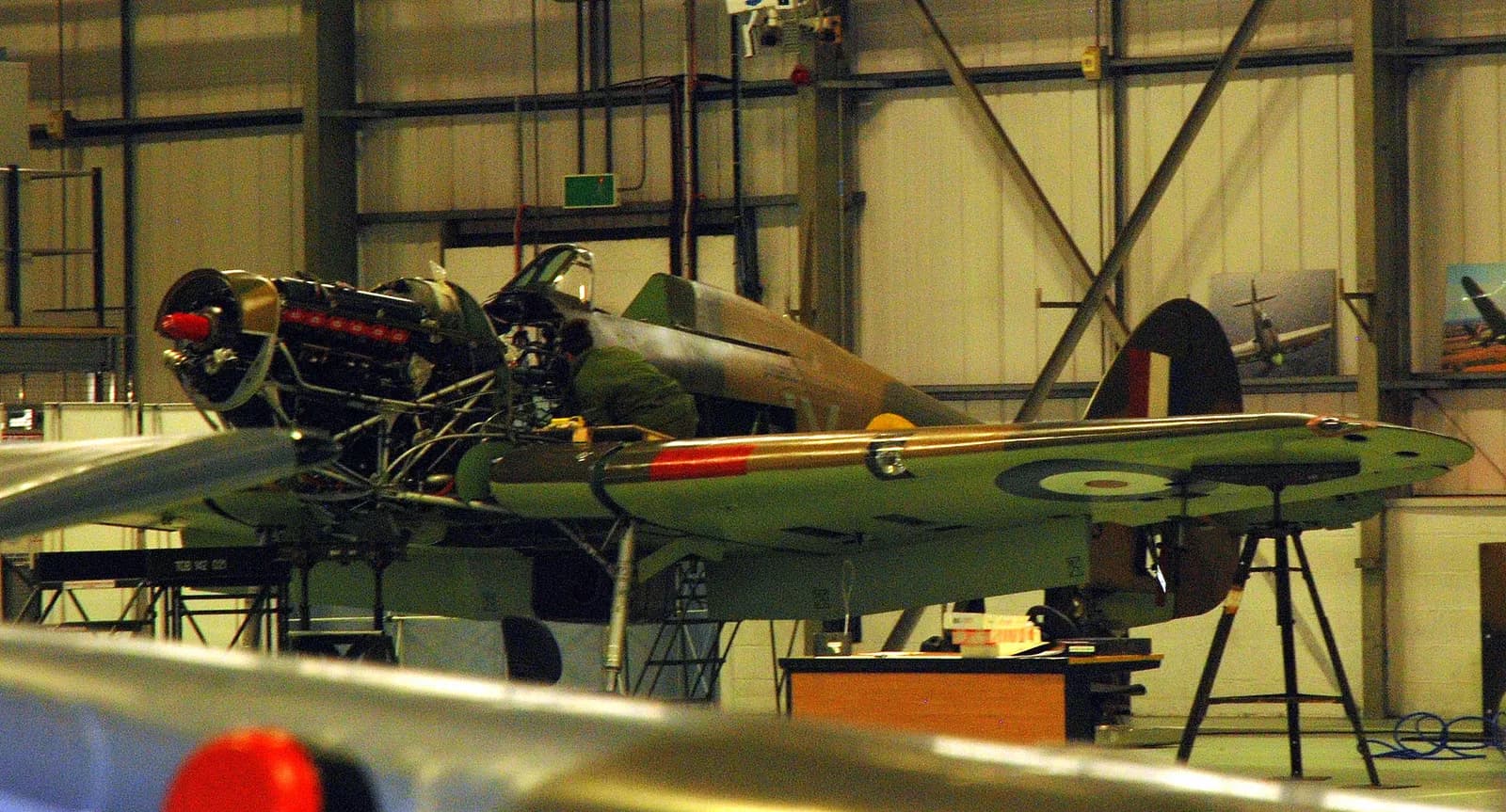
The Hawker Hurricane remains perhaps Kingston's most significant contribution to aviation history. Designed by Sir Sydney Camm, who joined Hawker as a senior draughtsman in November 1923 and was appointed chief designer in 1925, the Hurricane prototype was constructed at Hawker's Kingston facility.
The timeline of development reveals the methodical precision of aircraft design. A mock-up conference took place at Kingston on 10 January 1935. The Ministry of Aviation issued an order for the prototype on 21 February 1935. The airframe was completed at Kingston, then transported to Brooklands in Surrey for final assembly. The prototype, serial number K5083, was fully reassembled by 23 October 1935.
On 6 November 1935, test pilot George Bulman took the Hurricane aloft for its first flight at Brooklands. The aircraft would go on to become one of the most significant fighters of the Second World War, with production totalling 14,487 Hurricanes and Sea Hurricanes between 1937 and 1944. Hawker built 9,986 of these at its Brookworks and Langley facilities. The final Hurricane, PZ865, rolled off the production line on 27 July 1944.
The Hurricane's contribution during the Battle of Britain cemented its place in history. It accounted for more enemy aircraft destroyed than all other air and ground defences combined during the critical summer of 1940.
From Drawing Board to Vertical Flight
If the Hurricane represented the pinnacle of conventional fighter design, the P.1127 and its successor, the Harrier, broke entirely new ground. This vertical take-off and landing aircraft transformed military aviation, and its development was led from Kingston.
Development began in 1957, utilising the Bristol Pegasus vectored-thrust engine. In February 1959, design work transferred to Hawker's Experimental Design Office at Kingston. The Ministry of Supply issued a contract for two P.1127 prototypes in April 1959.
On 21 October 1960, the first prototype, XP831, achieved a tethered hover at Dunsfold Aerodrome in Surrey. The first free-flight hover followed on 19 November 1960, with test pilot Bill Bedford at the controls. The first conventional flight took place on 13 February 1961, and the first transition from vertical to horizontal flight was completed on 8 September 1961.
The Kestrel FGA.1, a developed variant, made its first flight on 7 March 1964. The definitive Harrier GR.1 followed on 31 August 1966. The project was overseen by Sir Sydney Camm and designer Ralph Hooper. Camm's contribution to British aviation was immense; he was responsible for 52 different aircraft types, with 26,000 manufactured in total.
Factory and Workforce
Hawker's Kingston operations were substantial. After purchasing the Richmond Road factory near Ham in 1948, the company gradually consolidated its operations there, moving from Canbury Park Road in 1958. This site became Hawker Siddeley's main aircraft factory and headquarters following the formation of the Hawker Siddeley Group in 1935.
At its peak in the mid-1960s, Hawker Siddeley employed approximately 4,500 people. The Langley factory in Berkshire, acquired in 1938, produced over 9,000 military aircraft including Hurricanes, Tempests, and Sea Furies. Dunsfold Aerodrome, purchased by Hawker in 1950, served as the primary test facility for the Hunter, P.1127, Harrier, and eventually the Hawk trainer.
The End of an Era
The Hawker name gradually faded from Kingston. The brand was officially dropped in 1963, with products rebranded as "Hawker Siddeley" or "HS". On 29 April 1977, the Hawker Siddeley Group was nationalised, merging with British Aircraft Corporation and Scottish Aviation to form British Aerospace.
The Lower Ham Road factory finally closed in 1992, bringing Kingston's century of aircraft manufacturing to an end. The site was partially redeveloped for housing, though the riverside portion was retained as a community centre and sports complex.
Today, few visible traces remain of Kingston's aviation heritage, yet the town's contribution to British military aviation remains unparalleled. From the Hurricane that helped win the Battle of Britain to the Harrier that revolutionised air combat, Kingston upon Thames shaped the skies above Britain for seventy years.