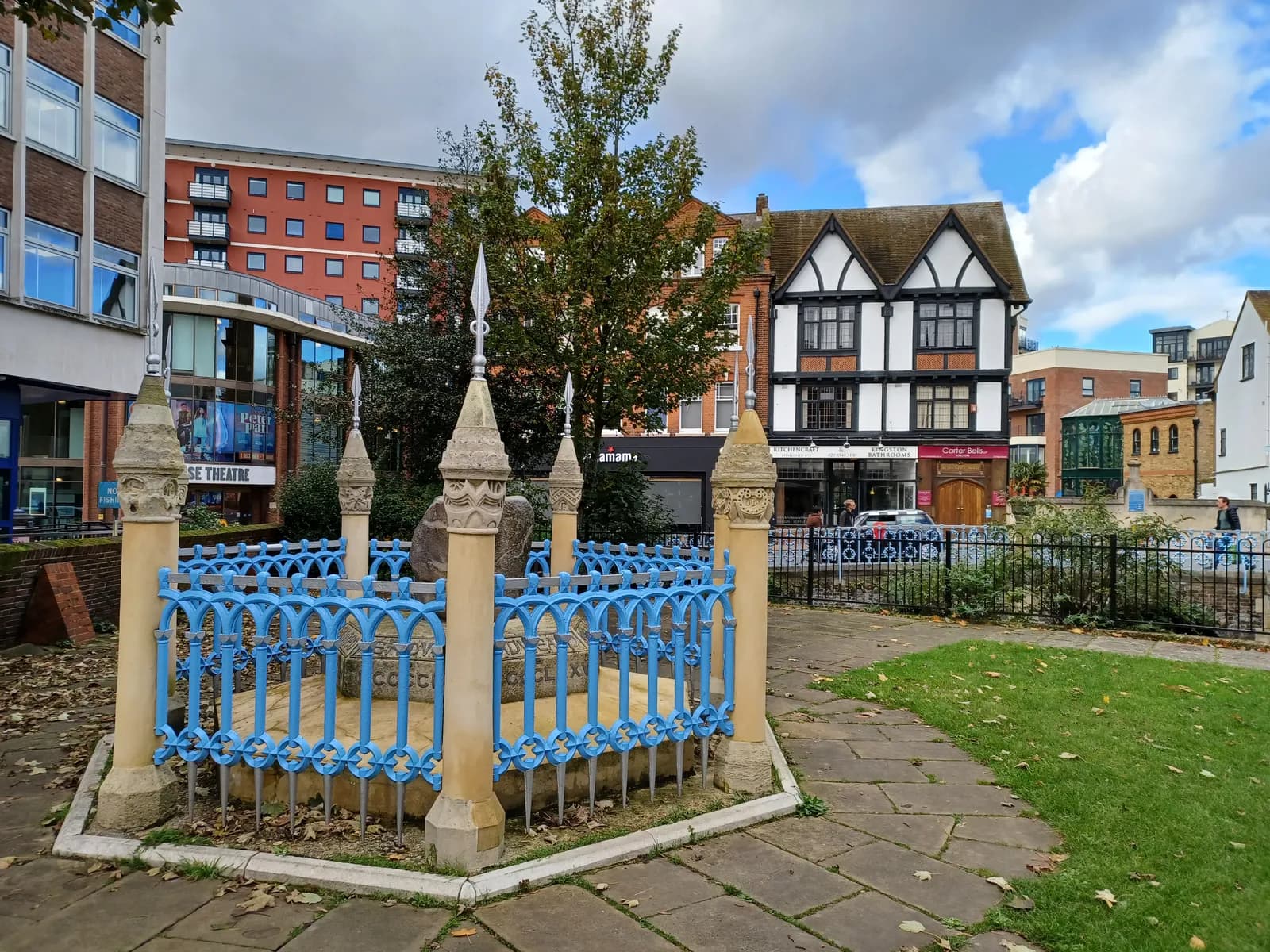
The weathered sarsen block standing outside Kingston Guildhall has witnessed the birth of a nation. Between the 10th and 11th centuries, seven Saxon monarchs are believed to have been crowned upon this stone, earning Kingston its name and a unique place in English history.
The Seven Kings of Kingston
Historical records most reliably confirm three coronations at Kingston upon Thames. Æthelstan was consecrated king on 4 September 925, possibly chosen for its symbolic position on the border between Wessex and Mercia. The Anglo-Saxon Chronicle notes that Archbishop Athelm conducted the ceremony, which introduced a new ordo featuring a crown rather than a helmet. Eadred followed in 946, and Æthelred the Unready received his consecration at Kingston in 979.
Four additional monarchs appear in traditional accounts but with less substantial documentary evidence: Edward the Elder (traditionally dated 902), Edmund I (939), Eadwig (956), and Edward the Martyr (975). Some sources also include Edgar the Peaceful around 960. The 12th-century chroniclers Florence of Worcester and Ralph de Diceto provide much of the supporting documentation for these later claims, though modern historians treat them with appropriate caution.
From Chapel Ruins to Mounting Block
The stone's own history is nearly as eventful as the ceremonies it witnessed. For centuries, tradition held that coronations took place within the Chapel of St Mary in Kingston. When that chapel collapsed in 1730, the stone was recovered from the rubble. Its importance apparently forgotten, it served for over a century as a mounting block for horsemen in the market place.
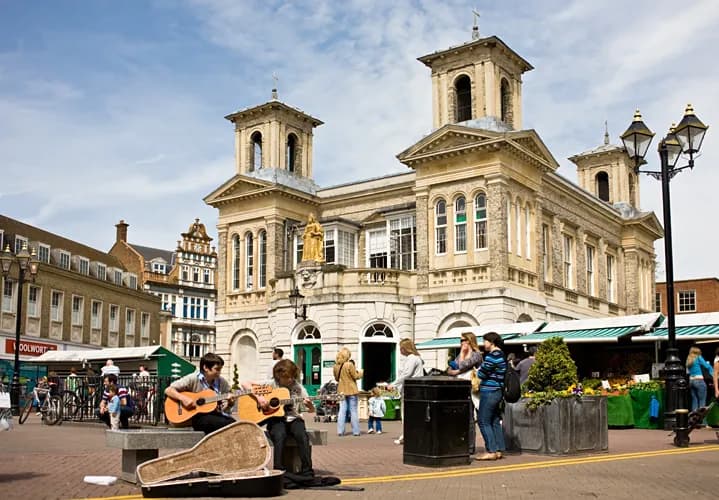
Recognition came in 1850, when the stone was placed on a plinth outside the old Town Hall. The names of the seven kings were inscribed around its side, cementing its status as a monument to Kingston's royal heritage. Today it stands beside the modern Guildhall, protected by low railings and open to public view.
Why Kingston?
The town's very name reveals its significance. Recorded as Cyninges tun as early as 838, it derives from the Old English for "the king's manor or estate." The first surviving record of Kingston dates to that same year, when King Egbert of Wessex met Archbishop Ceolnoth here for a council. Its location on the boundary between the kingdoms of Wessex and Mercia made it a natural site for ceremonies intended to unify the Anglo-Saxon realms.
John Stow, writing in the late 16th century, described Æthelstan's coronation as taking place "on a stage in the market place." Whether the stone itself served as the coronation platform or acquired its association later remains a matter of scholarly debate. What is clear is that by the 10th century, Kingston had become established as a place where England's kings were made.
A Living Monument
The Coronation Stone holds Grade I listed status on the National Heritage List for England, a recognition of its exceptional historical importance. In 2017, Kingston Council considered plans to return the stone to what may have been its original location within the churchyard of All Saints' Church, closer to where the Chapel of St Mary once stood.
For visitors today, the stone offers a tangible connection to the Anglo-Saxon past. It stands not in a museum case but in the open air, metres from the busy shopping streets of modern Kingston. Schoolchildren, tourists, and locals pass it daily, often unaware that this unassuming block of sarsen once supported the weight of England's earliest kings.